
Paradoxical Hypertrichosis After Laser Hair Removal: A Guide
Laser hair removal is a popular way to reduce unwanted facial and body hair for people of all genders. Most clients see gradual thinning and slower regrowth over a series of treatments.
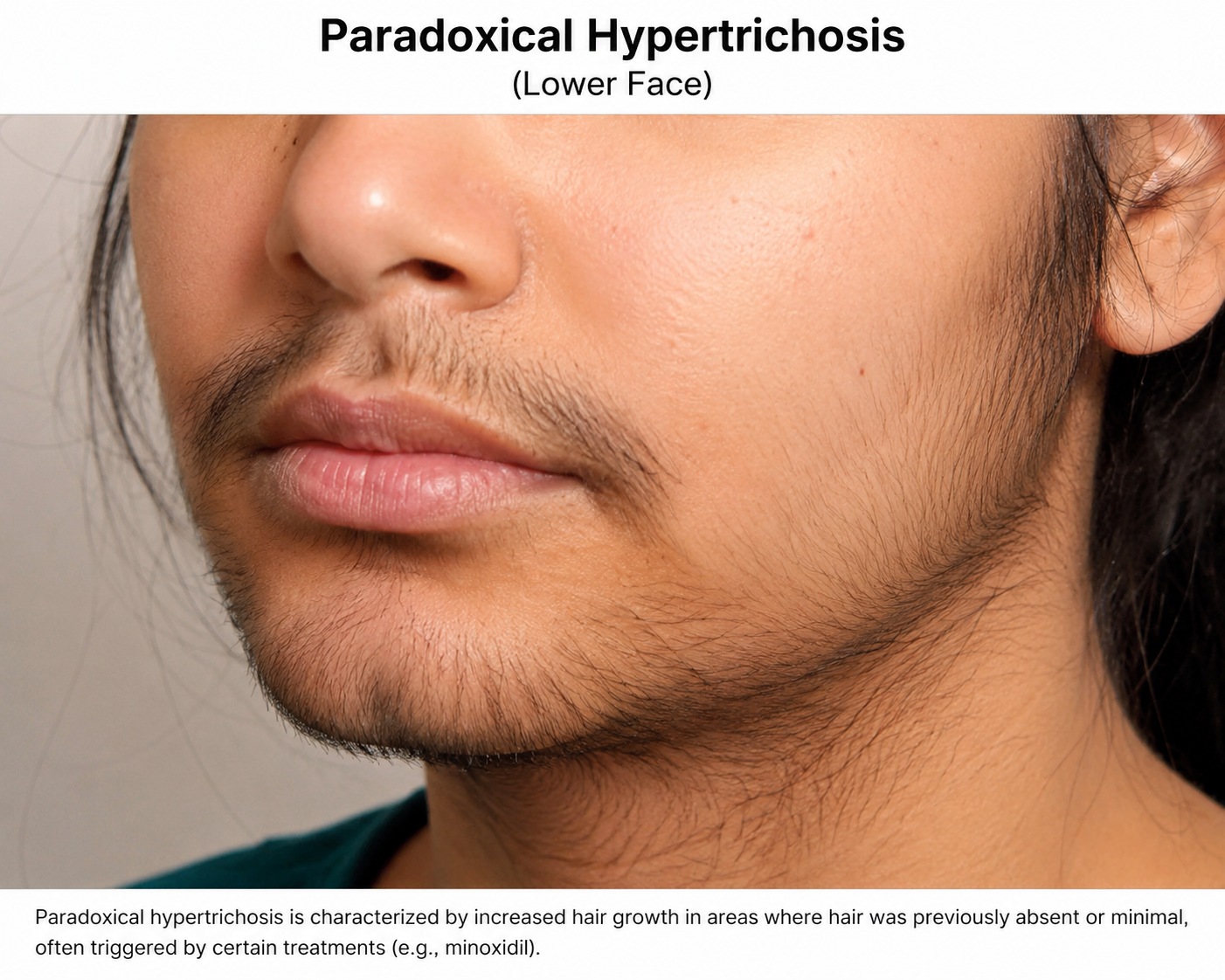
But there's a lesser-known potential side effect that can feel confusing and frustrating: paradoxical hypertrichosis —when hair in or near the treated area becomes thicker, darker, or more noticeable after laser.
Below is a clear, gender-neutral guide to what paradoxical hypertrichosis is, why it can happen, and what to do next. In most cases, the best path forward is working with an experienced laser technician and, when appropriate, using electrolysis to fully resolve the stimulated hair. If you're searching for how to fix paradoxical hypertrichosis after laser hair removal, you'll find practical next steps below.
What Is Paradoxical Hypertrichosis?
Paradoxical hypertrichosis (sometimes called paradoxical hair growth) is an uncommon response to laser hair removal where treated hair—or hair adjacent to the treated area—appears to increase rather than decrease.
Clients may notice:
New coarse hairs appearing in a previously fine-hair area
Thicker or denser regrowth than before
Hair spreading into nearby untreated zones (for example, along the jawline or neck)
Why Can Laser Trigger More Hair Growth?
The exact mechanism isn't fully understood, but paradoxical hypertrichosis is commonly associated with suboptimal treatment parameters—for example, settings that warm the follicle enough to stimulate it, but not enough to disable it.
Contributing factors can include:
Energy settings that are too low for the hair type and area
Device choice (wavelength and technology) not matched to skin tone and hair depth
Treating fine vellus hair (the soft "peach fuzz" type hair), which may respond unpredictably
Hormonal influences (for example, endocrine conditions or medication changes) that can drive new growth regardless of treatment
Who Is More Likely to Experience It?
Paradoxical hypertrichosis can happen to anyone, but risk may be higher when treating:
Areas with finer facial hair (cheeks, sideburns, jawline, neck)
Clients with darker skin tones or higher baseline pigmentation (which requires more careful parameter selection)
Hair that is not clearly coarse and pigmented at the start
That doesn't mean laser is "off limits"—it means a conservative, expert-led approach matters.
How Do You Know If It's Paradoxical Hypertrichosis vs. Normal Shedding/Regrowth?
Early in a laser series, it's common to see:
Hair shedding 1--3 weeks after a session
Patchy regrowth between sessions as follicles cycle
Paradoxical hypertrichosis is more likely when hair becomes progressively more noticeable over multiple sessions, especially if the hair shifts from fine to coarse, or expands to nearby areas.
If you're unsure, an in-person assessment with a qualified provider is the fastest way to tell what's happening and adjust the plan.
What To Do If You Suspect Paradoxical Hypertrichosis
If hair seems to be increasing after laser hair removal, don't panic—and don't keep repeating the exact same approach. The goal is to stop stimulation and choose the most effective method for the hair type you now have.
Practical next steps:
Schedule a consultation with an experienced laser technician to review settings, device type, treatment intervals, and the specific area being treated.
Ask about a strategy change (for example: different wavelength, adjusted fluence/pulse duration, spot size, or treatment plan).
Consider pausing laser on fine-hair zones if you're treating areas with mostly vellus hair and seeing stimulation.
Discuss electrolysis for complete removal of paradoxically stimulated hairs.
Why the Best Solution Is Often Electrolysis (Plus the Right Laser Expertise)
Electrolysis treats individual follicles and is not dependent on hair pigment, making it a strong option when laser results are unpredictable—especially for facial areas or when hair has been stimulated.
In many real-world cases, the most effective resolution is:
Experienced laser technician to prevent further stimulation and ensure any continued laser is truly appropriate for your skin and hair type
Electrolysis to permanently remove the coarse hairs that were triggered
This combined, expert-led approach is often what turns a frustrating outcome into a clear, workable plan.
How To Choose an Experienced Laser Technician
When paradoxical hypertrichosis is a concern in laser hair removal, technician experience and protocol matter as much as the device. During a consultation, ask about:
The specific laser technology and wavelengths used
How settings are chosen for your skin tone and hair type
How the provider approaches fine facial hair and higher-risk zones
What they do when a client reports increased growth
Whether they can coordinate with (or refer to) electrolysis when needed
Bottom Line
Paradoxical hypertrichosis is uncommon, but it's real—and it's treatable. If you're seeing increased hair growth after laser hair removal , the best next step is a personalized plan guided by an experienced laser technician , with electrolysis used to permanently remove stimulated hairs when appropriate.
If you'd like professional guidance on next steps, contact us to discuss your goals and schedule a consultation.


